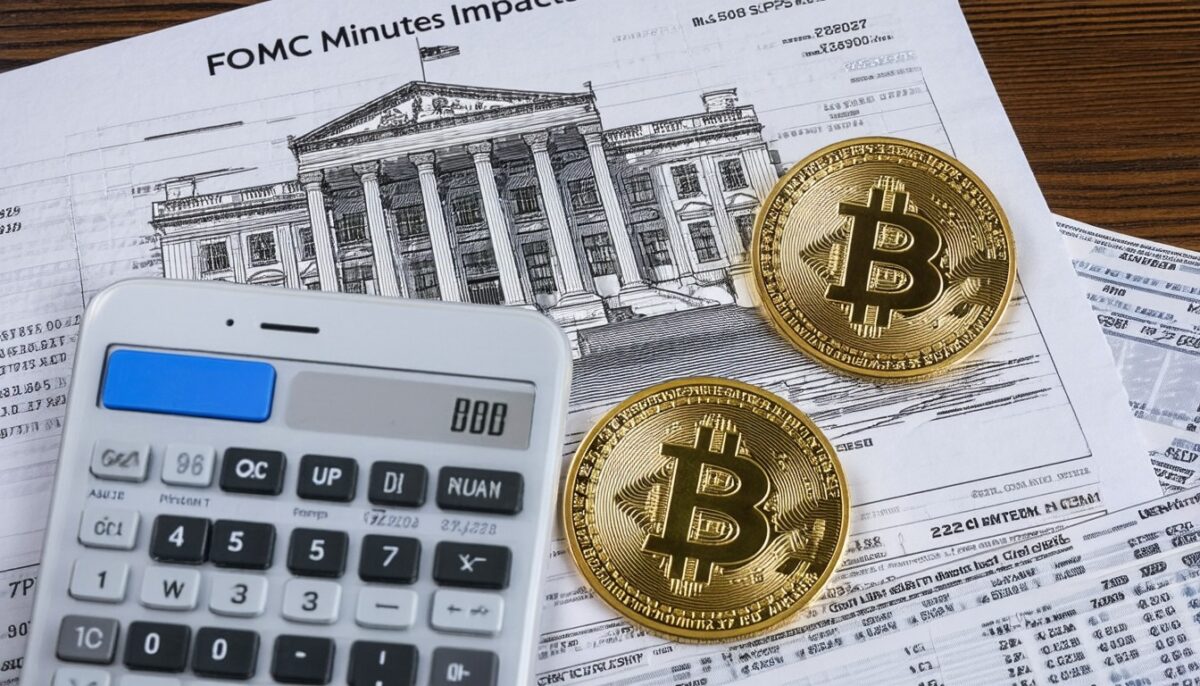

The U.S. Federal Reserve’s policy announcements have long been regarded as a bellwether for global financial markets. But in the past several years, a growing chorus of analysts and investors has been watching the crypto sector’s acute sensitivity to these signals. Among the most telling documents is the Federal Open Market Committee (FOMC) minutes, which lay bare not only the Fed’s monetary policy thinking but also subtle indications about future economic direction. As digital assets mature as an asset class, the FOMC minutes’ impact on crypto prices has moved from indirect to immediate, shaping volatility, trading volume, and risk sentiment across Bitcoin, Ethereum, and beyond.
What Are FOMC Minutes? Why Do They Matter?
The FOMC minutes are detailed transcripts released roughly three weeks after each Federal Reserve meeting. They provide a comprehensive account of officials’ views on economic growth, inflation, labor markets, and—critically—interest rate projections. Unlike the more carefully worded policy statements released directly after meetings, the minutes often contain candid discussion and nuance that can unsettle or reassure investors depending on the tone.
For traditional markets, every word is parsed for clues about rate hikes or cuts, tapering of asset purchases, or concerns about overheated markets. Now, crypto markets, known for their rapid price movements and risk-on characteristics, have begun to treat the FOMC minutes with heightened importance.
“Whenever the FOMC minutes underscore hawkish stances or hint at upcoming rate increases, you tend to see almost immediate reactions not just in stocks and bonds, but surprisingly in crypto assets as well,” notes Lyle Brandt, chief market strategist at a leading digital asset investment firm.
Crypto’s Relationship With the Federal Reserve: A Brief Evolution
While cryptocurrencies like Bitcoin were originally conceptualized to operate outside traditional central banking systems, modern market realities have made crypto’s fate deeply intertwined with macroeconomic policy.
Throughout the last decade, the correlation between monetary stimulus (such as low interest rates and quantitative easing) and the rise in crypto prices has become more apparent. Ultra-accommodative central bank policies during global crises—including the COVID-19 pandemic—provided a surge in liquidity, much of which found its way into speculative assets, crypto included.
On the other hand, statements in FOMC minutes pointing toward policy tightening, balance sheet reductions, or inflation concerns have often coincided with crypto market corrections. For example, when the Fed signaled persistent inflation and the potential for aggressive rate hikes in early 2022, Bitcoin fell by double-digit percentages over several months, mirroring risk-asset sell-offs.
Case in Point: The 2022-2023 Crypto Price Rollercoaster
- Early 2022: FOMC minutes revealed intensifying inflation fears and support for faster rate hikes. Bitcoin dropped from over $47,000 to under $40,000 within days, with altcoins experiencing even sharper declines.
- Late 2022: As the Fed hinted at a possible policy pivot or slower pace of tightening, crypto prices briefly rebounded, with Ethereum surging alongside speculative assets.
These examples illustrate how closely digital assets track U.S. monetary policy expectations—sometimes even more so than emerging market currencies or equities.
Why FOMC Minutes Move Crypto Markets
Several intertwined factors make the crypto market uniquely sensitive to FOMC minutes:
1. Liquidity and Risk Appetite
Low interest rates and easy financial conditions foster a “risk-on” environment, driving investors toward speculative assets, including crypto. The mere suggestion of tightening, as outlined in the FOMC minutes, can prompt a shift to “risk-off,” leading to rapid withdrawals from volatile asset classes.
2. Dollar Strength and Crypto Valuations
Fed policies directly affect the strength of the U.S. dollar. A hawkish tone in the minutes typically boosts the greenback, making dollar-denominated assets like Bitcoin relatively more expensive—pressuring crypto prices downward.
3. Institutional Participation
With more institutional capital flowing into crypto than ever before, macroeconomic narratives have an amplified effect. Algorithmic trading desks and hedge funds often program bots to react swiftly to certain phrases in the FOMC documents, contributing to increased price swings.
4. Sentiment and Search Trends
Analysis of Google search trends reveals a spike in queries such as “FOMC crypto impact” and “crypto price after Fed” in the days surrounding minutes releases. Social sentiment analysis demonstrates heightened market anxiety or relief in response to perceived dovish or hawkish tones.
Data-Driven Insights: Real-World Patterns and Analyst Perspectives
Multiple industry studies have attempted to quantify this relationship. For instance:
- A report by crypto analytics firm Kaiko found that Bitcoin’s 24-hour volatility consistently jumps following major FOMC minutes releases, often exceeding that seen during earnings season in traditional equities.
- Trading volumes on top crypto exchanges surge as traders reposition around macroeconomic news, especially during periods marked by policy uncertainty.
- Chainalysis research indicates that FOMC minutes are among the top external triggers for sharp, short-term moves in DeFi platforms.
Industry analysts add:
“The Fed might not set Bitcoin rates, but it does shape the environment in which all risk assets exist. The FOMC minutes are now a routine part of crypto price-watchers’ calendars,” says Maya Khan, chief economist at a global blockchain consultancy.
Crypto’s Forward-Looking Reaction: Volatility, Narrative, and Changing Market Structure
Importantly, the impact of the FOMC minutes isn’t merely reactive. In many cases, the anticipation of their release builds volatility beforehand, while post-release—if expectations are met—markets may stabilize quickly. This so-called “buy the rumor, sell the news” dynamic is increasingly common in digital assets.
Furthermore, as crypto markets mature, some assets—particularly Bitcoin and Ethereum—show more nuanced responses, factoring in relative positioning versus other asset classes.
Defensive Strategies and “Decoupling” Hopes
Some investors seek “hedge” strategies, such as rotating into stablecoins or sector-specific tokens less correlated to macro trends. Yet, calls for full “decoupling” from the Fed have yet to materialize in a consistent manner. Most evidence suggests digital assets will remain influenced by central bank rhetoric, at least until their adoption fundamentals or regulatory environment undergo tectonic shifts.
Conclusion: Reading the FOMC Minutes as a Crypto Investor
The impact of FOMC minutes on crypto prices can be immediate, outsized, or—at times—subtle, depending on prevailing risk sentiment and global liquidity conditions. As digital currencies become further enmeshed in global financial markets, understanding macro signals, especially those emanating from the Federal Reserve, remains essential.
Smart investors should incorporate FOMC minute analysis into their broader macro playbook—not just as a market-moving event, but as context for evaluating timing, risk, and pricing across digital assets. Going forward, increased institutional participation and algorithmic trading tied to macro data will likely accentuate this relationship.
FAQs
How quickly do crypto prices react to FOMC minutes?
Crypto prices can react within minutes or hours of the FOMC minutes’ release, especially during times of market uncertainty or surprise announcements. Volatility might persist for several days as traders digest the details.
Are all cryptocurrencies equally affected by FOMC minutes?
No, major coins like Bitcoin and Ethereum tend to show the strongest correlation, while smaller or niche tokens may not react as sharply. However, during broad market moves, most digital assets are impacted to varying degrees.
Can traders anticipate crypto moves before the FOMC minutes are released?
Savvy traders often position in advance based on expectations set by previous speeches or economic data, leading to volatility before the minutes even drop. However, genuine surprises in the minutes can still catch many off guard.
Is the relationship between crypto prices and the FOMC likely to change over time?
As crypto markets evolve and fundamentals change, some assets may become less sensitive to U.S. monetary policy. For now, though, macroeconomic factors remain a key driver for the sector.
What strategies might investors use during FOMC weeks?
Some investors reduce leverage or shift to stablecoins to manage risk in the days surrounding important Fed releases. Others watch for overreactions in the market as potential trading opportunities.