
Summary
Bankroll management is a foundational principle of successful online poker. When cryptocurrency is introduced as a payment method, bankroll strategy must account for both gameplay variance and digital asset behavior. Crypto poker adds an additional financial layer that requires careful planning and discipline. This article explores how players approach bankroll management in crypto poker environments and why digital asset awareness is essential for sustainable play.
Introduction
In traditional online poker, bankroll management focuses on controlling risk related to win rates, variance, and table selection. Crypto poker expands this framework by introducing assets whose value can change independently of gameplay.
Understanding how cryptocurrency affects bankroll dynamics is critical for players who participate in online poker using digital assets. This dual-risk environment highlights the importance of structured financial planning.
Separating Gameplay Risk From Asset Risk
One of the most important concepts in crypto poker bankroll management is separating gameplay risk from market risk. Poker outcomes fluctuate based on skill and variance, while cryptocurrency prices fluctuate based on market forces.
Many players manage this by limiting how much cryptocurrency is exposed to active play at any given time. This approach helps isolate poker performance from broader market movement.
Measuring Performance in Stable Terms
Crypto poker players often track results in fiat-equivalent terms rather than cryptocurrency units. This allows for clearer evaluation of gameplay success without distortion from asset price changes.
Using stable reference points helps maintain discipline and prevents short-term market volatility from influencing poker decisions.
Asset Selection and Risk Tolerance
Different cryptocurrencies introduce different levels of volatility. Players often select assets based on personal risk tolerance and playing frequency.
Stablecoins offer predictability, while volatile assets introduce additional variance. Crypto poker environments make these trade-offs visible in everyday decision-making.
Managing Buy-Ins and Session Size
Effective bankroll management involves defining limits for buy-ins and session duration. In crypto poker, this also includes deciding when to move funds on or off the platform.
Clear rules around buy-in size help prevent emotional decision-making influenced by asset price movements or short-term results.
Withdrawal Discipline and Liquidity
Crypto poker allows for relatively flexible fund movement, but discipline remains essential. Frequent withdrawals without a plan can expose players to unnecessary fees or timing risk.
Strategic liquidity management helps ensure that funds remain available for gameplay without excessive exposure to market fluctuations.
Security and Operational Risk
Bankroll management is closely linked to operational security. Wallet management, transaction verification, and device safety all influence financial outcomes.
Mistakes in handling digital assets can result in irreversible loss, making operational discipline as important as gameplay strategy.
Long-Term Perspective
Successful crypto poker participation often requires a long-term mindset. Short-term market swings and poker variance can obscure overall performance.
Players who maintain consistent rules and review results over extended periods are better positioned to make informed decisions.
Crypto Poker as a Financial Learning Environment
Crypto poker provides real-world exposure to financial decision-making under uncertainty. Managing both gameplay and asset behavior reinforces broader principles of risk management.
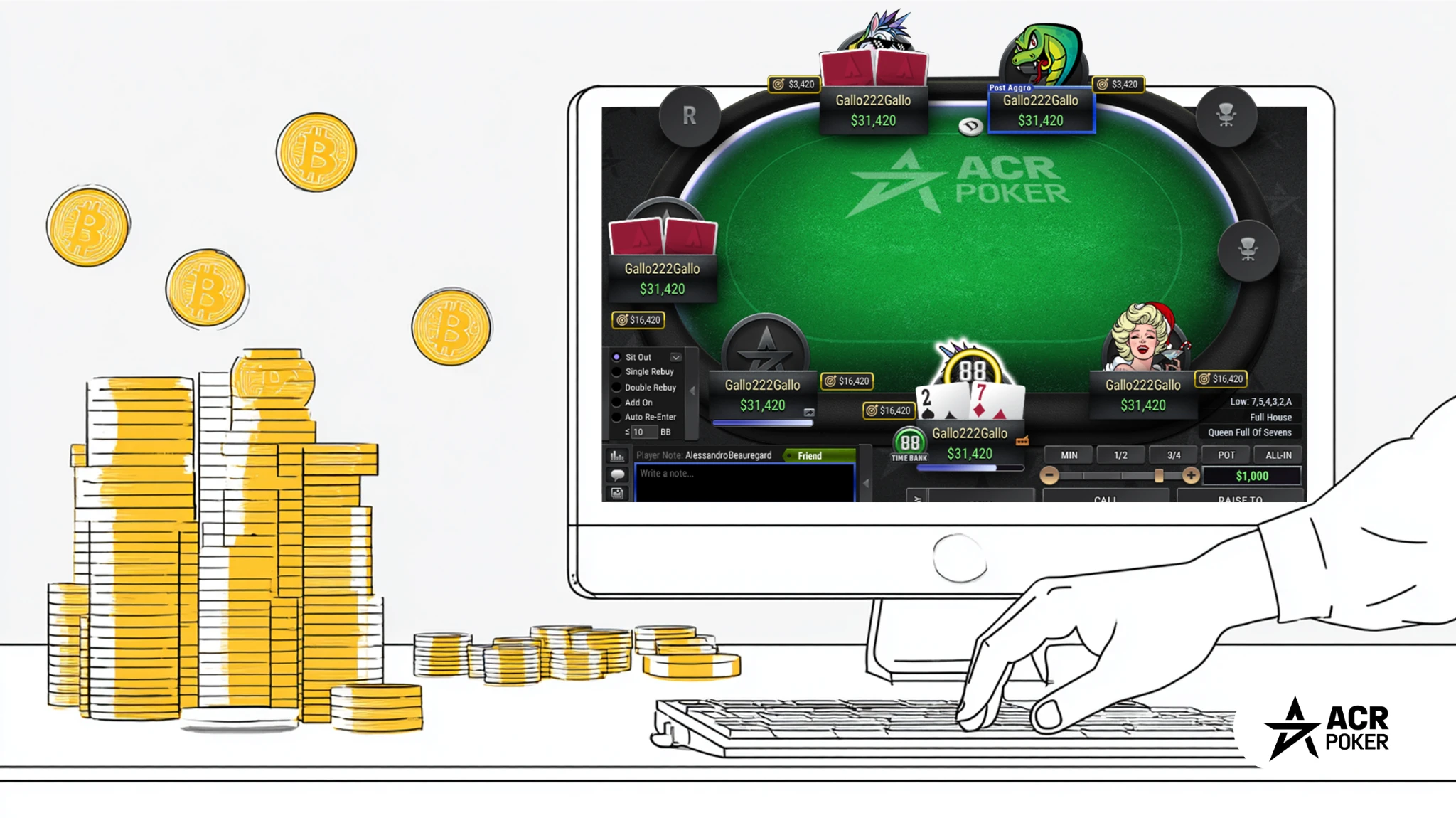
Platforms such as ACR Poker operate within this environment, where crypto poker highlights the intersection of skill-based gaming and digital asset finance.
Conclusion
Crypto poker introduces additional complexity to bankroll management by combining poker variance with cryptocurrency market behavior. By separating risks, tracking performance clearly, and maintaining disciplined financial rules, players can navigate this environment more effectively. Crypto poker remains a practical example of how digital assets influence real-world financial decision-making in online gaming.
The post ACR Poker and Crypto Poker Bankroll Management: Balancing Gameplay and Digital Asset Risk appeared first on Crypto-House.