
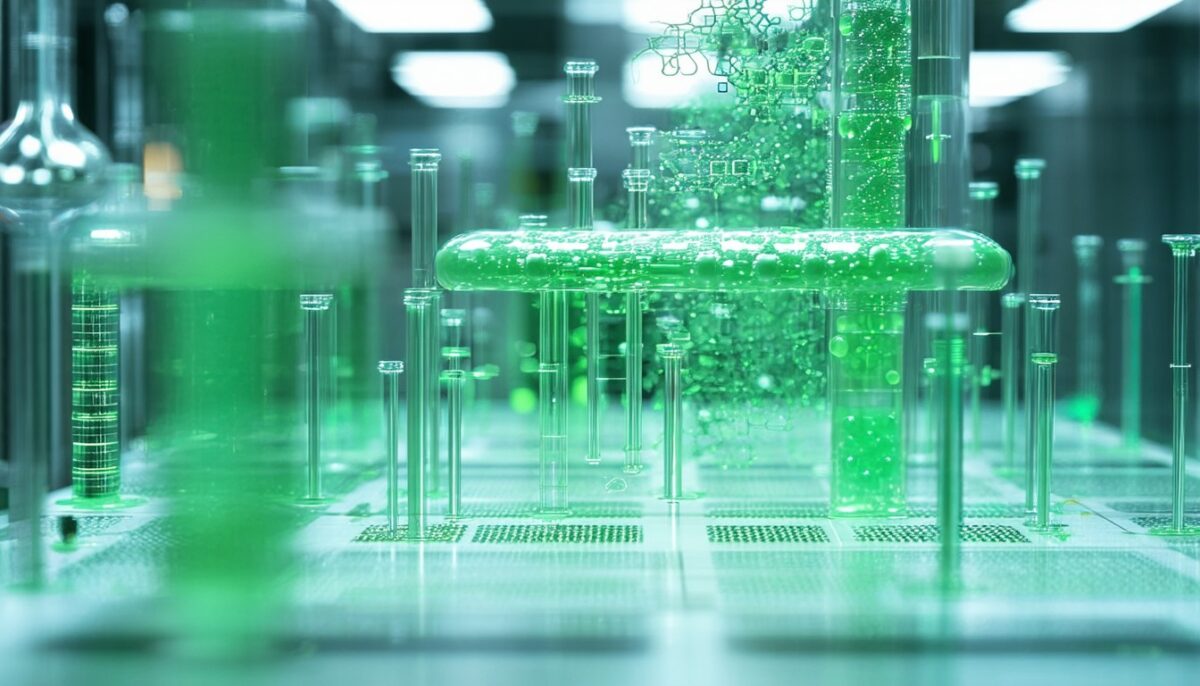

In the last two decades, nanotechnology has transitioned from cutting-edge theory to practical application, pivoting industries ranging from healthcare to electronics. At the heart of this evolution are “nano labs”: specialized research centers and startups dedicated to pushing the boundaries of nanoscale science. These innovative hubs blend advanced instrumentation, cross-disciplinary expertise, and a passion for discovery, enabling breakthroughs with the potential to transform daily life and global industries alike.
Understanding Nano Labs: Mission, Capabilities, and Impact
Nano labs are laboratories equipped to work at the nanometer scale, typically handling materials and devices between 1 and 100 nanometers in size. Their mission is twofold: to advance fundamental nanoscience research, and to engineer solutions that address real-world challenges.
Core Functions and Research Areas
Most nano labs focus on:
- Material Synthesis and Characterization: Creating and analyzing nanomaterials, such as nanoparticles, nanotubes, and nanowires, with precise control over properties like size, shape, and surface functionality.
- Device Fabrication: Building nanoscale electronic, photonic, or biomedical devices, often using cleanrooms and advanced lithography.
- Cross-disciplinary Collaboration: Working alongside chemists, physicists, biologists, and engineers to apply nanotechnology innovations across multiple sectors.
For example, a nano lab in a leading university may develop quantum dots for next-generation display screens, while a commercial nano lab partners with pharmas to design drug delivery nanoparticles targeting cancerous cells.
Driving Real-World Impact
The influence of nano labs is increasingly visible beyond academic circles. In electronics, for instance, nanotechnologies have enabled faster and more efficient transistors in modern microprocessors. In medicine, nano labs have contributed to the creation of lipid nanoparticle carriers for mRNA vaccines—a pivotal factor in the rapid response to recent global health crises.
Advanced Instruments and Techniques in Nano Labs
Ultimately, the power of a nano lab resides in its technology. Precision tools are vital, as manipulating and observing matter at such a minute scale requires both delicacy and accuracy.
Essential Tools and Methodologies
Common instrumentation and techniques include:
- Atomic Force Microscopy (AFM): For imaging surfaces at atomic resolution.
- Scanning Electron Microscopy (SEM): To visualize and measure nanostructures.
- X-ray Diffraction (XRD) and Spectroscopy: For material characterization and composition analysis.
- Nanoimprint Lithography and Electron-beam Lithography: To pattern nanoscale devices and circuits.
- Dynamic Light Scattering (DLS): For determining nanoparticle sizes in colloidal suspensions.
Interdisciplinary Integration
In practice, nano labs leverage techniques adapted from multiple scientific disciplines, allowing them to solve challenges in areas as diverse as renewable energy (such as more efficient solar cells), antimicrobial coatings, and biosensors for diagnostics.
Pioneering Applications: How Nano Labs Shape the Future
Nano labs do not operate in isolation; their innovations quickly ripple outward, powering advances in high-impact fields.
Healthcare and Life Sciences
Perhaps nowhere is the effect of nanotechnology more apparent than in healthcare. Nano labs have driven the development of:
- Targeted Drug Delivery Systems: Nanoparticles engineered to deliver drugs only to diseased tissues, reducing side effects.
- Diagnostic Tools: Lab-on-a-chip devices and nanosensors, providing faster and more accurate disease detection.
As Dr. Anita Purohit, a leading nanomedicine researcher, observes:
“Nano labs have shifted the paradigm in personalized medicine. By designing carriers at the nanoscale, we’re able to tailor therapies to individual patients—something unthinkable even a decade ago.”
Electronics and Computing
Smaller, more efficient, and powerful electronic components are routinely the result of work originating in nano labs, from carbon nanotube transistors to energy-efficient memory storage. Semiconductor giants collaborate with academic nano labs to maintain the pace of miniaturization predicted by Moore’s Law.
Environmental and Energy Solutions
Nano labs also focus on sustainability: developing photocatalysts for clean water, membranes for desalination, and nanostructured electrodes that enhance battery performance or enable flexible solar panels.
Advanced Materials
From ultra-strong carbon nanofiber composites used in aerospace to self-healing materials and stain-resistant nano-coatings, the research at nano labs delivers products tangible to consumers and industries alike.
The Innovation Ecosystem: Collaboration and Commercialization
Breakthroughs in nanoscience increasingly emerge from collaborations between academic nano labs, startups, and established industry players.
Academia, Industry, and Startups Working Together
Universities provide the theoretical foundation and state-of-the-art facilities for exploratory research, while startups like Nanosys or Nano Dimension bridge the gap to commercialization, focusing on scalable production and real-world testing. Large corporations often fund joint ventures, recognizing the strategic value in staying close to new discoveries.
Challenges in Scaling and Safety
Despite these successes, nano labs face challenges:
- Scale-up: Scaling nanomaterial production from grams in the lab to kilograms for industrial use without compromising properties.
- Regulation and Safety: Ensuring that nanomaterials are both efficacious and safe, with rigorous toxicity and environmental impact studies.
Government agencies and industry associations are now prioritizing the development of safety protocols and standardized testing, helping ensure nanotechnology’s responsible growth.
Conclusion: Nano Labs at the Forefront of the Next Revolution
Nano labs have convincingly established themselves as the vanguard of scientific and technological advancement. Their interdisciplinary approach, world-class technologies, and strong collaborative mindset drive innovations that touch all aspects of modern life. As commercialization continues and standards mature, nano labs are poised to lead the next wave of breakthroughs—turning nanoscale science into solutions for some of humanity’s grandest challenges.
FAQs
What is a nano lab?
A nano lab is a specialized laboratory designed for research and development at the nanometer scale. It enables scientists to manipulate, observe, and test materials and devices with dimensions of just a few atoms to several hundred nanometers.
What industries benefit most from nano lab research?
Healthcare, electronics, materials science, environmental technology, and energy industries all benefit significantly from nano lab breakthroughs. Applications range from new medicines and diagnostics to advanced batteries and smart coatings.
How do nano labs ensure the safety of nanomaterials?
Nano labs follow stringent protocols for handling and testing nanomaterials. Comprehensive toxicity, bioaccumulation, and environmental impact studies are increasingly required before new nanomaterials reach the market.
What skills are needed to work in a nano lab?
Researchers in nano labs typically have backgrounds in chemistry, physics, materials science, or engineering. Expertise in instrumentation, data analysis, and interdisciplinary collaboration is crucial.
Can innovations from nano labs be commercialized easily?
While nanotechnology discoveries often show promise in the lab, scaling up for industrial or clinical use can be complex. Startups and industry partnerships help bridge this gap, focusing on scalable processes and regulatory approval.