
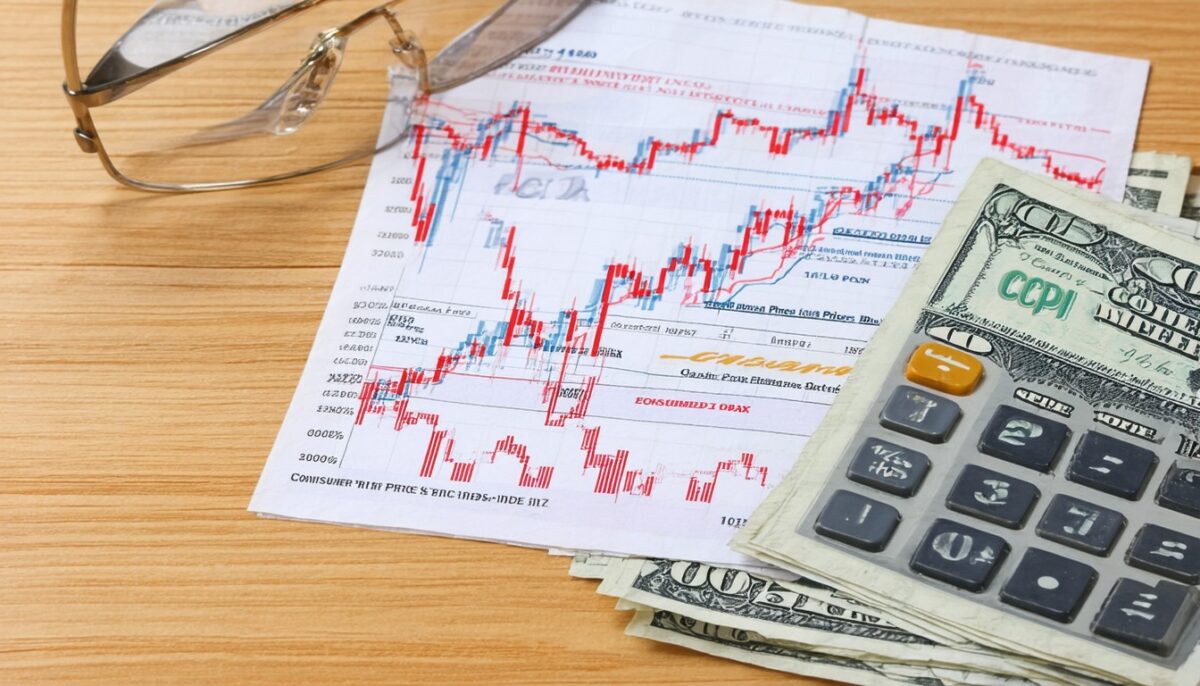

Economic headlines often revolve around inflation, cost of living, and purchasing power. At the heart of these conversations stands the Consumer Price Index (CPI)—a crucial economic indicator that monitors changes in the prices paid by urban consumers for a representative basket of goods and services. Policymakers, economists, businesses, and everyday citizens look to the CPI as both a barometer of economic health and a guide for impactful decisions. But why does this metric carry such weight, and how does it tangibly impact our lives?
Understanding CPI: Definition and Methodology
What Is the Consumer Price Index?
The Consumer Price Index is a statistical estimate constructed by comparing the current prices of a fixed collection of everyday items with their prices in a base year. These items span categories like food, housing, healthcare, transportation, and education. By quantifying how overall prices shift over time, the CPI helps capture the essence of inflation or deflation.
In the United States, the Bureau of Labor Statistics (BLS) is the key agency behind the CPI. Each month, the BLS collects data from thousands of retail and service establishments across the country, ensuring broad representation of spending patterns.
How Is the CPI Calculated?
The CPI is calculated by:
- Selecting a representative “basket” of goods and services—based on extensive surveys of consumer expenditures.
- Recording prices for these items across multiple geographic zones.
- Comparing average price changes to the base year, resulting in a percentage change that reflects inflation or deflation over the period.
The formula can be simplified as:
CPI = (Cost of Basket in Current Period / Cost of Basket in Base Period) × 100
Core CPI, a variant, excludes volatile food and energy prices, providing a steadier indication of underlying inflation trends.
Real-World Example
Consider the aftermath of the COVID-19 pandemic. Supply chain disruptions led to visible surges in prices for commodities like meat, gasoline, and used cars. These increases were directly mirrored in monthly spikes in the CPI, affirming its role as a real-time inflation barometer.
Economic Significance of the CPI
A Guiding Tool for Policymakers
Central banks and government agencies closely monitor the CPI to guide economic policy. If CPI readings indicate excessive inflation, central banks may raise interest rates to cool off consumer spending. On the other hand, persistently low or negative CPI values could prompt stimulus measures.
“The CPI is not just a statistic; it is a signal that influences trillions in spending, investment, and policy every year.” — Dr. Rebecca M. Leighton, professor of macroeconomics.
Impact on Wages, Social Security, and Contracts
Many cost-of-living adjustments (COLAs) hinge on the CPI. For instance, U.S. Social Security payments are annually adjusted based on the CPI-W, a specific urban wage earners’ subset. Labor contracts often incorporate CPI-based clauses to protect workers’ purchasing power during inflationary periods.
Market Reactions and Investor Decisions
Financial markets track CPI announcements closely. Higher-than-expected readings can trigger selloffs in bonds, as investors anticipate interest rate hikes. Conversely, tame inflation data can buoy equities and fixed-income markets, signaling economic stability.
CPI in Practice: Strengths and Limitations
Why CPI Is Trusted
- Broad Coverage: The CPI includes a diverse basket, reflecting real-world spending.
- Regular Updates: Monthly releases ensure relevance and timeliness.
- Comparability: Internationally, CPIs are standardized, enabling economic comparison.
Known Challenges
- Substitution Bias: Consumers may shift to cheaper alternatives as prices rise—a dynamic not always captured promptly.
- Quality Adjustments: Upgrades in goods (e.g., smartphones) complicate price comparisons over time.
- Demographic Differences: The CPI’s basket may not fully reflect every group’s consumption.
Despite these challenges, most economists agree that the CPI remains one of the most reliable and carefully vetted inflation gauges globally.
The Global Perspective: CPI Around the World
Every advanced economy tracks inflation using an index similar to the CPI, though each tailors the basket to local consumption habits. In the Eurozone, the Harmonised Index of Consumer Prices (HICP) harmonizes methodology across member states for comparative insights. Developing nations use the CPI for policy guidance as well, but may face greater hurdles in data collection and accuracy due to informal economies.
Emerging market economies have seen periods where CPI volatility foreshadowed currency crises, such as in Argentina and Turkey. Stable CPI trends, by contrast, typically underpin investor confidence and sustainable growth.
CPI’s Evolving Role Amid 21st-Century Change
The Digital Economy and Non-Traditional Consumption
Traditional CPI baskets sometimes lag behind shifting consumer realities—such as the rapid rise of streaming services and e-commerce. Statistical agencies have gradually modernized methodologies to better reflect digital consumption and evolving product categories.
Climate Risk and Energy Price Volatility
With energy prices becoming increasingly susceptible to geopolitical and environmental shifts, many analysts watch both headline CPI and core CPI for a full inflation picture. Green transitions and policy moves can influence both underlying costs and consumer price dynamics.
Summary: Why the CPI Matters Now More Than Ever
The Consumer Price Index is more than a monthly headline or policy tool—it functions as an indispensable compass for citizens, businesses, and governments navigating modern economies. While it faces methodological and contextual challenges, thoughtful adjustments and ongoing scrutiny keep it a relevant gauge.
Progress hinges on continuously refining the CPI to encapsulate shifting consumption habits, new technologies, and emerging risks, ensuring it remains a reliable anchor for policy and planning.
FAQs
What does CPI measure specifically?
The CPI tracks the average change in prices urban consumers pay for a curated basket of goods and services, giving insight into inflation or deflation.
How does the CPI influence everyday life?
CPI changes impact cost-of-living adjustments, wage negotiations, rent agreements, and social security benefits, affecting purchasing power and savings.
What’s the difference between CPI and core CPI?
Core CPI excludes food and energy items—often subject to volatile price swings—to reveal long-term inflation trends more clearly.
Is the CPI the same in all countries?
While the concept is global, each nation customizes its CPI basket to fit local spending patterns and consumption habits.
Why do some experts criticize the CPI?
Critics highlight potential inaccuracies from substitution bias, slow adoption of new products, and limited demographic coverage, although agencies strive to address these issues.
How frequently is CPI updated and released?
In most advanced economies, including the U.S., the CPI is updated and published monthly, reflecting the ongoing evolution of consumer prices.