

Summary
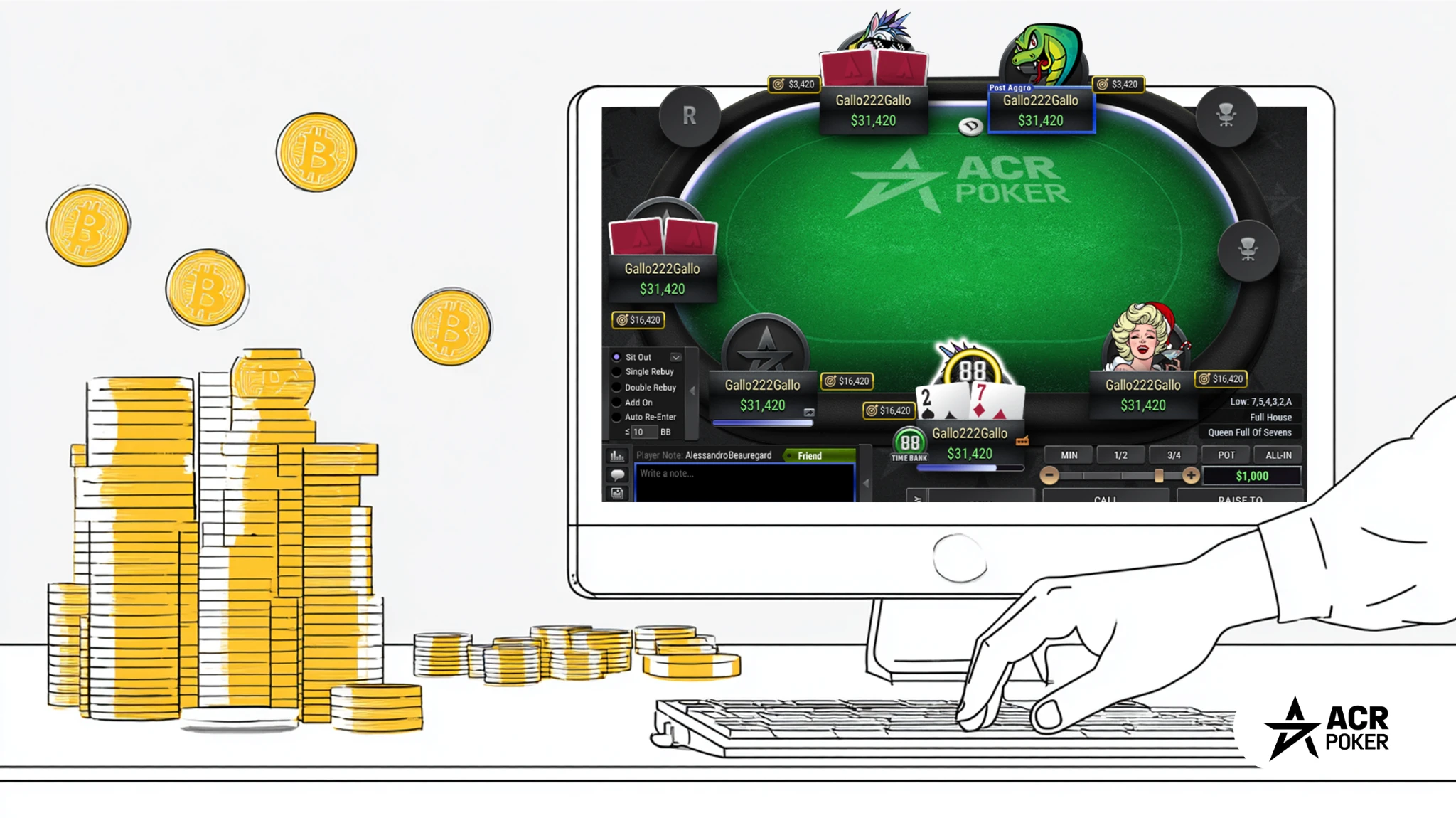
Payment efficiency has long been a limiting factor in the growth of online poker. Delays, processing failures, and geographic restrictions have historically shaped how and where players can participate. The emergence of crypto poker, particularly bitcoin poker, has introduced alternative payment rails that reduce friction and expand global access. Using ACR Poker as a reference point, this article explores how cryptocurrency payments are reshaping deposits, withdrawals, and financial flow within online poker ecosystems.
Introduction
In online poker, payment systems are more than a convenience; they directly affect player trust, liquidity, and retention. Traditional banking methods have often introduced friction through extended withdrawal timelines, intermediary fees, and inconsistent availability across regions.
Crypto poker changes this equation. By using blockchain-based transactions, bitcoin poker platforms offer a fundamentally different approach to moving funds in and out of poker ecosystems. ACR Poker operates within this model, making it a useful case study for understanding how cryptocurrency payments influence the operational and economic structure of online poker platforms.
The Limitations of Traditional Poker Payment Systems
Before the adoption of cryptocurrency, online poker payments depended heavily on centralized financial institutions. This model presented several challenges:
- Long withdrawal processing times
- High rejection rates in certain regions
- Currency conversion fees
- Vulnerability to banking policy changes
For international player pools, these limitations often restricted participation and discouraged repeat play.
How Bitcoin Poker Payments Work
Bitcoin poker payments rely on blockchain networks rather than banks or card processors. Players send funds directly from a crypto wallet to a platform-controlled address, with transactions verified through decentralized consensus mechanisms.
Core Characteristics of Bitcoin Poker Payments
- No intermediaries between sender and receiver
- Publicly verifiable transaction records
- Irreversible transactions once confirmed
- Fees determined by network conditions rather than banks
This structure significantly alters the speed and predictability of poker transactions.
Deposit Efficiency in Crypto Poker Environments
Deposits are typically the first point of friction in online poker. In crypto poker systems, deposits are often credited after a set number of blockchain confirmations.
Benefits for Players
- Near-instant deposit recognition
- Fewer declined transactions
- Accessibility across borders
- No dependency on banking hours
For platforms like ACR Poker, faster deposits translate into quicker table access and higher conversion from registration to active play.
Withdrawal Speed and Player Trust
Withdrawals are where crypto poker payment systems demonstrate their most tangible advantages. Traditional poker withdrawals can take days or weeks depending on method and region.
Bitcoin poker withdrawals generally offer:
- Faster processing cycles
- Fewer intermediary delays
- Predictable transaction tracking via blockchain explorers
While processing time still depends on platform procedures and network congestion, crypto withdrawals are often perceived as more transparent than fiat alternatives.
Transaction Costs and Network Fees
One trade-off in bitcoin poker payments is exposure to blockchain network fees, which can fluctuate based on demand.
Key Cost Considerations
- Fees vary depending on network congestion
- Higher fees can accelerate confirmation times
- Fees are independent of transaction amount
Despite variability, these costs are often lower than international banking fees, especially for cross-border transfers.
Multi-Currency Support and Player Flexibility
Crypto poker platforms increasingly support multiple cryptocurrencies beyond Bitcoin, offering players flexibility in how they manage their bankrolls.
This approach allows players to:
- Choose assets aligned with their risk tolerance
- Manage exposure to volatility
- Consolidate gaming funds within crypto wallets
ACR Poker’s participation in this broader crypto ecosystem reflects a shift toward asset-agnostic payment models in online poker.
Risk Management in Crypto Poker Payments
While crypto payments reduce institutional friction, they also introduce new forms of risk.
Common Payment-Related Risks
- Cryptocurrency price volatility
- User error in wallet addresses
- Delayed confirmations during network congestion
- Responsibility for private key security
Effective bankroll management and basic blockchain literacy are essential for players operating in bitcoin poker environments.
Regulatory Context of Crypto Poker Payments
Cryptocurrency payments exist within an evolving regulatory landscape. While blockchain transactions are decentralized, poker platforms must still comply with:
- Anti-money laundering frameworks
- Identity verification requirements
- Jurisdiction-specific gaming regulations
This hybrid structure reflects the transitional phase of crypto adoption within regulated online gaming industries.
Comparing Crypto Poker and Fiat Poker Payments
When comparing payment models, clear distinctions emerge:
- Crypto poker emphasizes speed and borderless access
- Fiat systems offer familiarity and consumer protections
- Crypto payments reduce intermediary dependence
- Fiat payments centralize dispute resolution
Each system serves different user preferences, and many players choose platforms based on payment convenience rather than gameplay alone.
Conclusion
Bitcoin poker has redefined how funds move within online poker ecosystems. By eliminating traditional banking intermediaries, crypto poker payments offer faster, more transparent transactions and expanded global access. ACR Poker illustrates how these systems function at scale, highlighting both the efficiencies and responsibilities that come with cryptocurrency-based payments.
As blockchain infrastructure matures, crypto poker payments are likely to become more streamlined, reinforcing their role as a core component of modern online poker platforms.