
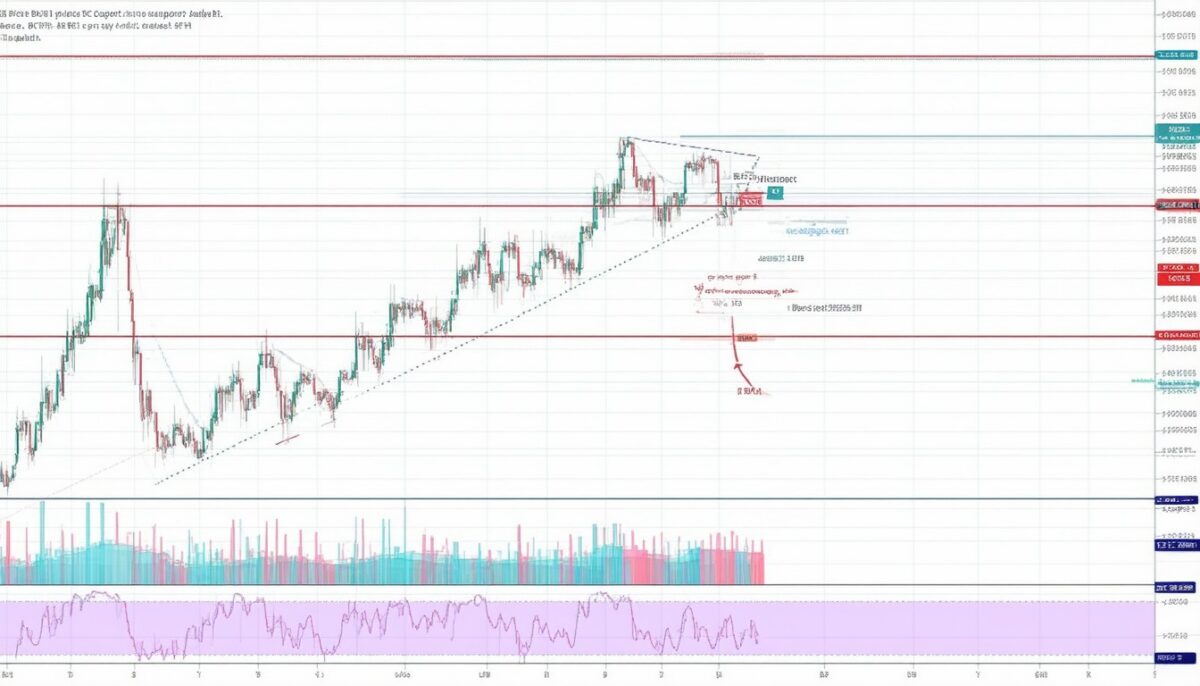

As cryptocurrency markets continue to evolve and mature, both institutional and retail participants closely monitor Bitcoin (BTC) and Ethereum (ETH) for potential clues about broader risk sentiment. Over the past year, BTC and ETH have demonstrated resilience amid volatile macroeconomic backdrops, with price action frequently gravitating toward well-established support and resistance levels. For traders, investors, and analysts alike, understanding these technical markers is essential for navigating rapid turns in market psychology.
The Landscape: Why Support and Resistance Levels Matter
Technical analysis remains a foundational tool in the world of crypto trading. Unlike legacy assets, BTC and ETH are traded 24/7, generating continuous data for chartists to interpret. Support levels, where demand typically outweighs selling pressure, offer potential “floors.” Conversely, resistance levels mark areas where bulls often meet formidable selling interest, creating potential “ceilings.”
Throughout 2023 and into 2024, sharp rallies and corrections have underscored the importance of these technical thresholds. Traders have seen time and again that the failure or confirmation of a key level can trigger outsized directional moves—moves often driven by high-leverage positioning and algorithmic trading.
“Support and resistance are more than just lines on a chart—they reflect the aggregate sentiment and order flow of millions of market participants,” says Sofia Ramos, head of crypto strategy at a leading market analytics firm. “In a market as emotional as Bitcoin or Ethereum, these levels quickly become self-fulfilling prophecies.”
Bitcoin (BTC) Price Analysis: Recent Trends and Key Levels
Bitcoin, as the flagship cryptocurrency, often sets the tone for the entire asset class. After reaching new all-time highs in late 2021, BTC underwent a protracted period of correction and consolidation. Recent quarters have seen a renewed uptrend, with broader institutional acceptance and spot ETF narratives providing fuel for rallies.
Critical Support Levels for BTC
Several support zones have consistently acted as bulwarks during market retracements:
- $64,000–65,000 Zone: Frequently observed as an area where large buyers step in, particularly on news-driven dips. This zone also aligns with previous breakout levels from early 2024.
- $60,000 Support: Regarded as a psychological milestone and former resistance-turned-support. Market participants often note increased trading volume in this area, suggesting real conviction from buyers.
- $52,000–53,000 Region: Historically significant, as this band supported prices during selloffs in 2022 before the broader market bottomed out.
In practice, breaching these support levels on heightened volume can open the path for more aggressive selling, particularly as leveraged traders exit positions.
Resistance Levels to Watch for BTC
On the upside, Bitcoin faces recurring resistance zones that have capped upward momentum:
- $72,000–73,000 Barrier: This area marks multiple attempts at breaking new highs, often coinciding with profit-taking and increased short-term volatility.
- $75,000 All-Time Highs: Any move above previous records can trigger “blue sky” scenarios, drawing fresh liquidity but also inviting swift pullbacks.
- $80,000 (Speculative Resistance): While not yet tested, round numbers often act as magnets, especially if markets enter price discovery mode.
Historically, breakouts above strong resistance levels have been followed by rapid and sometimes unsustainable surges, as seen during previous bull runs.
Ethereum (ETH) Price Analysis: Diverging and Converging Patterns
While Bitcoin continues to dominate headlines, Ethereum remains the backbone for much of the decentralized finance (DeFi) and NFT ecosystems. ETH’s price behavior often mirrors BTC’s, but not without its own idiosyncrasies—especially during major protocol upgrades or when network activity surges.
Key Support Levels for ETH
- $3,200–3,250 Support: This level has served as a foundation for multiple rebounds, frequently acting as a pivot point for mid-term trend shifts.
- $2,900–3,000 Psychological Support: Round numbers continue to hold sway in crypto trading, representing areas where both speculative and long-term buyers increase activity.
- $2,500–2,600 Base: Seen as a stronghold from prior corrections, especially during broader downturns in the altcoin market.
Should ETH lose these supports, downside could accelerate rapidly, as has been observed during periods of heightened market stress.
Resistance Levels That Could Shape ETH’s Future
- $3,700–3,800 Resistance: This band represents previous rally tops, with persistent selling interest apparent from historical volume analysis.
- $4,000 Psychological Resistance: Much like BTC’s $60k and $75k, the $4,000 mark attracts outsized attention, with many traders setting profit targets or limit orders here.
- $4,500–4,800 Historical Highs: While ETH remains below its all-time highs set during the 2021 NFT and DeFi boom, any advance toward this region would signify a dramatic shift in sentiment.
It’s worth noting that systemic news—such as network upgrades, regulatory actions, or macroeconomic shocks—can rapidly invalidate technical setups, causing sudden breakouts or breakdowns.
Market Context: Macro Trends, Volume, and Sentiment
Beyond basic price levels, real-world context enhances the relevance of technical analysis. Since 2023, spot Bitcoin ETFs have funneled new capital into BTC, fundamentally altering market dynamics. Similarly, Ethereum’s transition to proof-of-stake and the impending implementation of scaling solutions continue to shape ETH’s investment narrative.
- On-chain Data: Monitoring wallet flows, miner activity, and large transactions adds an extra layer of insight. Notable whale movements often correlate with price reactions near key technical zones.
- Derivatives Markets: Open interest in BTC and ETH futures can highlight where the majority of leveraged positions are clustered—often near resistance or support, compounding the importance of these levels.
- Global Macro: Interest rate policy, risk appetite, and regulatory news can all dramatically shift crypto price dynamics, occasionally overwhelming even the most robust technical formations.
In practice, blending technical analysis with on-chain and macro perspectives yields a more holistic view, equipping traders to avoid “false breakouts” and act decisively during surges in volatility.
Conclusion: Strategic Roadmap in Uncertain Markets
BTC and ETH remain at the center of digital asset innovation, with price action intricately tied to both technical milestones and structural developments across the crypto landscape. Support and resistance levels remain critical navigation tools, but successful participants incorporate broader market context and emerging data.
Ultimately, the fast-evolving nature of cryptocurrency demands adaptability. Staying attuned to technical shifts—while blending in fundamental and sentiment signals—can offer investors and traders a real edge amid uncertainty.
FAQs
What do support and resistance levels mean in crypto trading?
Support refers to price zones where buying interest prevents further declines, while resistance marks areas where selling pressure caps gains. These levels reflect the psychology and actions of market participants.
How often do BTC and ETH break support or resistance levels?
Breakouts above resistance or breakdowns below support happen periodically, often driven by major news, high trading volumes, or shifts in sentiment. However, “fakeouts” are common, making risk management essential.
What tools help identify key levels for Bitcoin and Ethereum?
Technical indicators like moving averages, Fibonacci retracements, and trading volume profiles are commonly used. Observing historical price action and major event-driven spikes also helps highlight crucial zones.
Why do round numbers like $60,000 for BTC or $4,000 for ETH matter?
Round numbers act as psychological anchors, often concentrating orders from both retail and institutional traders. Price reactions around these levels can be more pronounced due to the collective focus.
Can macroeconomic events override technical price levels in crypto?
Yes, significant macro events—such as regulatory changes, monetary policy shifts, or economic crises—can sharply move BTC and ETH prices, at times overshadowing established support or resistance.
Are BTC and ETH price patterns predictable?
While technical analysis helps highlight probability zones, cryptocurrency remains highly volatile. Combining chart patterns with fundamental insights and diligent risk control offers the best approach to navigating unpredictability.