
As digital assets continue to evolve in both complexity and utility, certain cryptocurrencies have emerged with unique value propositions and growing real-world adoption. Hedera Hashgraph’s native token, HBAR, stands out in the crowded ecosystem due to its distinctive consensus architecture, enterprise backing, and rising developer interest. With more investors and technologists seeking sustainable, scalable blockchain solutions, HBAR’s trajectory garners significant attention for its potential impact, price volatility, and future growth prospects.
What Is HBAR? An Overview of Hedera Hashgraph
HBAR serves as the native cryptocurrency of the Hedera network, a public distributed ledger that leverages a novel technology called hashgraph. Unlike traditional blockchains, Hedera’s hashgraph provides a high-throughput, low-latency consensus mechanism known for security and fairness.
Key Features and Use Cases
- Enterprise-Grade Performance: The network boasts transaction speeds significantly higher than many legacy blockchains, with near real-time finality at a low, predictable cost.
- Energy Efficiency: According to independent studies, Hedera’s proof-of-stake mechanism offers a highly energy-efficient alternative, appealing to organizations prioritizing sustainability.
- Real-World Applications: Major enterprises such as Google, IBM, and Boeing participate in Hedera’s governing council, using the network for everything from supply chain management to micropayments.
Beyond these features, the utility of HBAR spans transaction fees, network security (via staking), and protocol governance, ensuring its central role within the Hedera ecosystem.
HBAR Price Trends: Analysis and Historical Context
Price prediction and analysis for HBAR require a nuanced understanding of crypto market cycles, external adoption metrics, and overall digital asset sentiment.
Historical Performance Overview
HBAR’s price history highlights classic patterns seen in the broader cryptocurrency market. After its initial listing, HBAR saw periods of rapid growth, corrections, and stabilization. Notably, its price surged during the digital asset bull market of late 2020 and 2021, riding the wave of speculative enthusiasm and increased recognition of Hedera’s partnerships.
Influential Drivers Behind Price Fluctuations
Several factors have contributed to HBAR’s price dynamics:
- Enterprise Partnerships: Announcements regarding new council members or enterprise integrations often lead to increased interest and speculative inflows.
- Network Utility Growth: Expansion of decentralized applications (dApps), stablecoins, and NFT projects on Hedera drive organic demand for HBAR.
- Macroeconomic Sentiment: HBAR, like most crypto assets, is not immune to wider market risk-on/risk-off cycles and regulatory developments.
“HBAR’s price reflects both its technological promise and the growing appetite among institutions for scalable, green blockchain solutions,” explains a blockchain industry analyst familiar with enterprise adoption trends.
Technical Analysis: Key Patterns and Signals
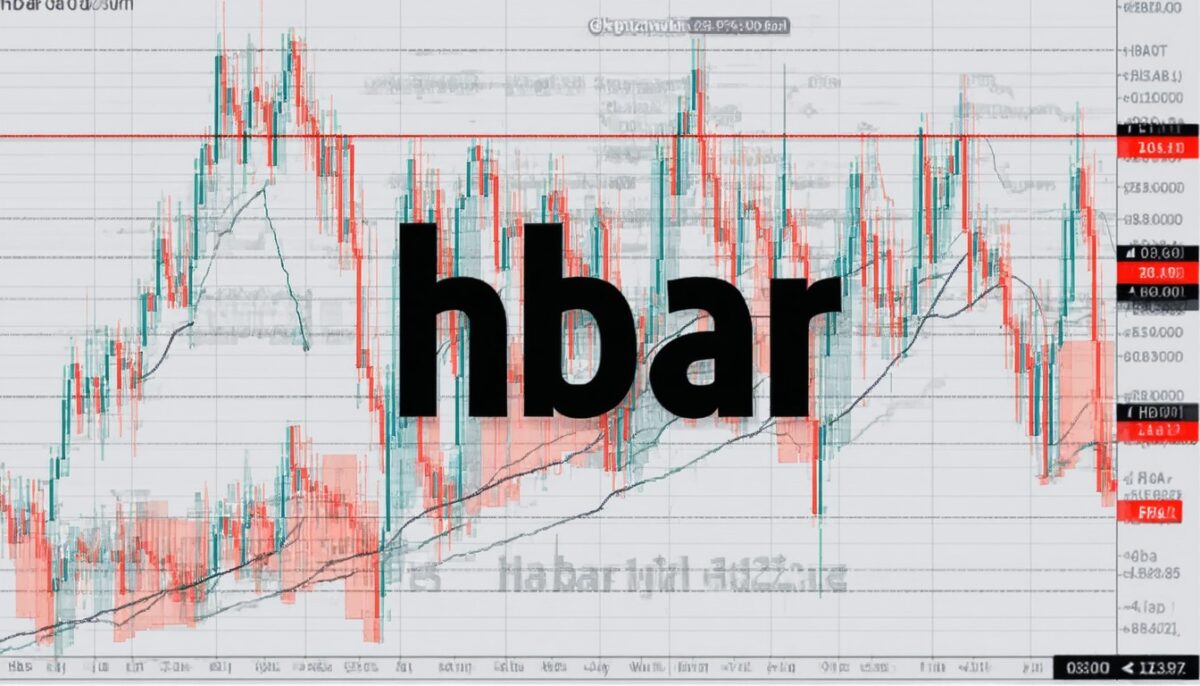
Seasoned traders frequently rely on technical analysis to inform their short-to-medium-term outlook on HBAR’s price. This blends statistical chart patterns, volume analysis, and conventional indicators.
Support, Resistance, and Momentum
Many analysts have observed that HBAR trades within well-defined support and resistance zones, mirroring significant accumulation or distribution phases. Recent trading history may reveal:
- Support Levels: Zones where buying activity historically increases, often linked to previous price lows.
- Resistance Levels: Upper thresholds where selling pressure tends to cap further upside, commonly following local peaks.
- Momentum Indicators: Tools such as the Relative Strength Index (RSI) and Moving Average Convergence Divergence (MACD) help gauge overbought or oversold conditions.
On-Chain Metrics and Sentiment
Beyond charting, on-chain data—such as total value locked (TVL) in DeFi applications, transaction growth, and developer activity—provides key insights into network health and potential price direction.
In practice, periods of rising network usage or significant council developments can precede meaningful price moves. However, as with any digital asset, technical analysis should be tempered with caution, as crypto markets often react strongly to unexpected events.
HBAR News and Industry Catalysts
Recent Developments
Ongoing news coverage has highlighted several headline-making partnerships and technical upgrades for the Hedera network. For instance, the network’s integration with additional Fortune 500 companies and initiatives surrounding tokenization of real-world assets have captured the attention of both institutional and retail investors.
Regulatory and Industry Shifts
Emerging regulation—both positive and negative—throughout North America, Europe, and Asia continuously shapes sentiment and trading activity around HBAR. While clarity on digital asset rules tends to support long-term adoption, sudden changes can fuel volatility.
Future Outlook: HBAR Price Predictions and Scenarios
Drawing on established forecasting methods as well as emerging market trends presents a balanced outlook for HBAR’s future.
Bullish and Bearish Scenarios
Several models suggest that continued enterprise onboarding and sustained dApp growth could position HBAR for steady gains, particularly if the digital asset market as a whole resumes a bullish cycle. On the other hand, intensified competition, delayed product rollouts, or unfavorable regulation could cap upside potential or lead to prolonged consolidation.
- Bullish Case: Widespread adoption, broader integration into decentralized finance, and ongoing sustainability initiatives could drive double-digit growth over the next few years.
- Bearish Case: Regulatory headwinds or loss of developer momentum may keep prices range-bound or result in sharp corrections.
Expert Consensus
While price predictions vary, the majority of analysts point to enterprise engagement, network metrics, and regulatory clarity as the most critical variables for HBAR’s long-term value. Wise investors consider both on-chain and off-chain signals before making significant portfolio adjustments.
Conclusion: Key Takeaways and Strategic Insights
HBAR sits at the crossroads of innovation and adoption in the crypto universe. Its unique technology, strong corporate governance model, and real-world use cases set it apart amid ongoing digital asset volatility. As new developments and broader market trends unfold, careful monitoring of both network fundamentals and external catalysts will be essential.
For investors, industry participants, and observers, HBAR’s journey offers a compelling case study in how advanced blockchain solutions are progressively transforming value exchange and enterprise operations.
FAQs
What is HBAR’s primary use in the Hedera ecosystem?
HBAR serves as the main token for transaction fees, network security through staking, and protocol governance on the Hedera Hashgraph network.
How does Hedera Hashgraph differ from traditional blockchains?
Unlike blockchains that use linear chains of blocks, Hedera’s hashgraph architecture allows for greater speed, efficiency, and security via asynchronous Byzantine Fault Tolerance.
Is HBAR considered a green cryptocurrency?
Yes. Independent analyses have consistently cited Hedera as one of the most energy-efficient public ledgers, making HBAR a leading choice for sustainable blockchain adoption.
What factors can influence the price of HBAR?
Key influences include network growth, major partnerships, regulatory news, macroeconomic trends, and broader digital asset market movements.
Can enterprises build directly on Hedera?
Absolutely. Many global corporations have developed or piloted projects leveraging Hedera’s infrastructure, with its governing council guiding future technical directions.
What risks should HBAR investors consider?
Investors should remain aware of crypto market volatility, changing regulatory environments, and competition from other high-performance distributed ledger platforms.