
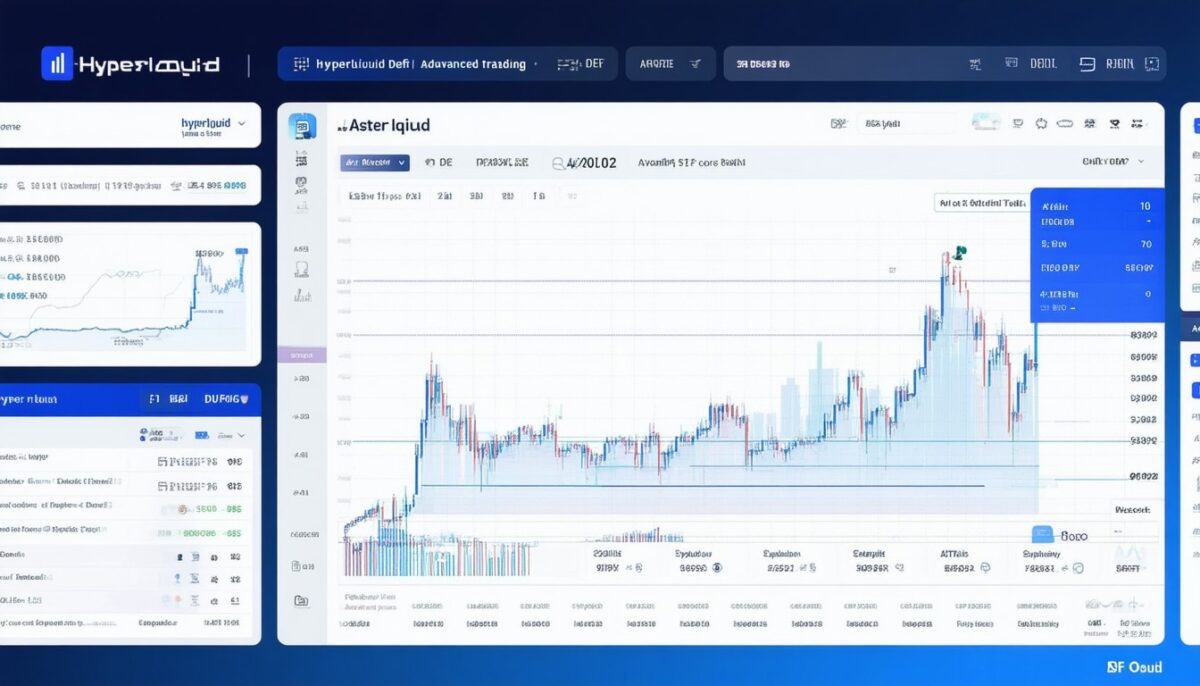

Decentralized Finance (DeFi) has rapidly redefined the rules of trading and asset management, enabling users to transact, invest, and earn yields without intermediaries. At the forefront of this innovation are platforms like Hyperliquid and Aster, which position themselves as advanced DeFi trading solutions catering to a new generation of crypto traders. These platforms leverage non-custodial architecture, offer deep liquidity, and prioritize user-centric features that bridge functionality and security. As financial sovereignty becomes a core priority for both retail and institutional investors, understanding the mechanics, advantages, and potential trade-offs of Hyperliquid and Aster is vital for navigating the maturing DeFi landscape.
Hyperliquid & Aster: At the Vanguard of DeFi Derivatives
What Sets Hyperliquid Apart in DeFi Trading
Hyperliquid enters the DeFi trading conversation as a protocol specialized in perpetual futures, aiming for the speed and reliability of centralized exchanges—without sacrificing decentralization. These perpetual swap products allow traders to speculate on the price of crypto assets with leverage, all while using self-custodial wallets. Hyperliquid’s design focuses on:
- On-chain order books: Mirroring the user experience of centralized exchanges but without relying on a single entity to hold assets or run the matching engine.
- High throughput and low latency: Utilizes bespoke app chains or advanced Layer 2 solutions, granting users near-instantaneous trade execution.
- Transparent risk management: Collateral and liquidations are governed by verifiable smart contracts, building trust through code and public audit trails.
Expert voices in the industry recognize this shift.
“Hyperliquid exemplifies the merging of performance and decentralization—delivering trading experiences that rival CEXs while keeping users in control of their assets,” says Simon P., an independent DeFi analyst.
Aster’s Approach: Multi-Chain Accessibility and User-Friendly Design
Aster has also attracted significant attention for bringing intuitive interfaces and robust interoperability to DeFi trading. Designed to support cross-chain assets and liquidity, Aster’s architecture emphasizes:
- Unified trading for multiple blockchains: Traders can manage a portfolio that spans Ethereum, Polygon, and other supported chains on one platform.
- Simple onboarding and account abstraction: Features that abstract away blockchain complexity help onboard mainstream users unfamiliar with wallet setups or gas fees.
- Risk reduction mechanisms: Auto-deleveraging and on-chain insurance mechanisms lower user exposure to extreme volatility or smart contract failures.
Aster’s focus on accessibility is particularly relevant as DeFi attempts to widen its user base beyond technically savvy crypto natives.
Key Features: Comparing Platform Capabilities
Deep Liquidity and Order Execution
One of the strengths powering both Hyperliquid and Aster is the breadth of liquidity offered. By integrating liquidity pools and market-making incentives, these platforms reduce the slippage that often deters both small and large-volume traders in traditional DeFi protocols. Hyperliquid’s real-time order book and Aster’s pooled liquidity model facilitate:
- Tighter spreads on major crypto asset pairs.
- Scalable trade sizes without significant price impact.
- Transparent execution data, allowing users to verify fills on-chain.
Security and Transparency
Security is an ever-present concern for DeFi users. Both Hyperliquid and Aster have made demonstrable efforts to harden their protocols through:
- Rigorous smart contract audits from third-party firms.
- Public bug bounties to encourage community-driven security improvements.
- Transparent documentation and real-time dashboards exposing system health and collateralization metrics.
In practice, enhanced transparency sets new standards for DeFi accountability, with both protocols publishing security post-mortems and engaging with community governance.
Non-Custodial Control & Sovereignty
Unlike centralized exchanges, both Hyperliquid and Aster emphasize the principle: “Not your keys, not your coins.” Users maintain control of their private keys, and thus their assets, at all times. This not only mitigates counterparty risk but also ensures that:
- User funds are not rehypothecated or at risk from exchange failures.
- Withdrawals can be executed on-demand, independent of platform operators.
- Governance features empower users to propose and vote on protocol changes.
Fee Structures and Incentives
Fee models in DeFi trading are closely scrutinized for fairness and sustainability. Hyperliquid tends to levy maker-taker fees that are competitive with major centralized exchanges, with periodic rebates for high-volume traders. Aster, meanwhile, experiments with dynamic fees and liquidity mining rewards, incentivizing users not just to trade, but also to supply liquidity and participate in governance.
Real-World Usage: Case Studies and Adoption
Hyperliquid: High-Volume Trading Without Middlemen
A notable cohort of crypto-native trading firms has adopted Hyperliquid to execute delta-neutral strategies and manage risk without sacrificing trading speed. Anecdotal evidence from high-frequency traders shows that they have reduced spreads by leveraging Hyperliquid’s low-latency infrastructure, previously only available on CEXs. In volatile periods, robust collateral management has protected both market makers and takers from cascading liquidations—a frequent problem on less robust DeFi platforms.
Aster: Democratizing Advanced Tools
Aster’s onboarding tools have seen traction among retail users, especially in emerging markets where access to banking and CEXs can be restricted. For example, community trading competitions and learn-to-earn programs have driven on-chain activity and fostered a transparent, collaborative environment. By minimizing technical barriers, Aster is onboarding a class of users that may have otherwise never participated in DeFi derivatives.
The Competitive Landscape and Future Trends
As DeFi trading matures, platforms like Hyperliquid and Aster are competing head-to-head with not just traditional DeFi competitors but leading centralized exchanges. Innovations in order routing, cross-chain settlements, and regulatory compliance are set to dictate who leads the next wave of crypto market infrastructure.
Researchers observe that hybrid models—blending aspects of centralized performance and decentralized security—are likely to gain momentum. As regulation looms and institutional interest grows, both Hyperliquid and Aster’s willingness to adapt to compliance demands could influence wider adoption.
Conclusion: Unlocking the Next Generation of DeFi Trading
Hyperliquid and Aster exemplify the accelerated evolution of DeFi trading platforms, offering powerful tools for both experts and newcomers. They solve legacy pain points surrounding custody, execution speed, and usability—while raising industry standards for transparency and security. As users seek alternatives to centralized venues, platforms that combine robust technical infrastructure with user empowerment will define the market’s next chapter. For investors and traders, the priority should remain evaluating a platform’s security, transparency, and adaptability to future regulations as DeFi continues to mature.
FAQs
What distinguishes Hyperliquid from traditional DeFi trading platforms?
Hyperliquid offers on-chain order books and trading speeds that closely resemble centralized exchanges, while maintaining full user custody over assets. This model combines performance with the transparency and trustlessness expected in DeFi.
How does Aster make DeFi trading more accessible?
Aster uses intuitive onboarding, account abstraction, and support for multiple blockchains to lower barriers for new users. Its interface simplifies trading and asset management for those unfamiliar with DeFi or crypto wallets.
Are funds safe on Hyperliquid and Aster?
Both platforms undergo regular smart contract audits and publish security updates. By allowing users to maintain control of their private keys, they reduce risks associated with centralized custody, although due diligence is always recommended.
Can beginners use platforms like Hyperliquid and Aster?
Yes, especially Aster, which is designed for usability and educational support. Hyperliquid may appeal more to experienced traders familiar with derivatives, but both platforms work to onboard users with simplified processes.
What are the main risks associated with DeFi trading?
Risks include smart contract vulnerabilities, market volatility, and potential regulatory changes. Both Hyperliquid and Aster implement safeguards, but users should exercise caution and understand all risks before participating.
How do Hyperliquid and Aster generate revenue?
They mainly earn through trading fees, but also incentivize participation with rewards and governance tokens. Their fee structures are designed to attract both traders and liquidity providers while promoting sustainable protocol growth.