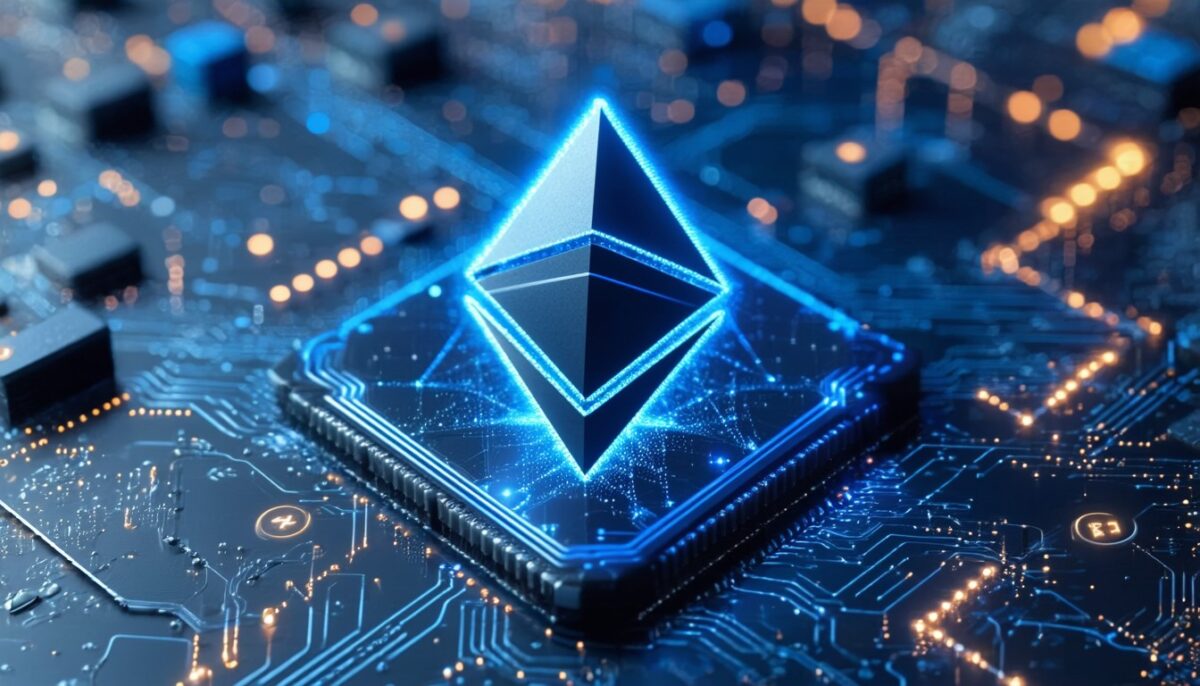

Ethereum has grown far beyond its initial vision as a decentralized platform for smart contracts. With thousands of decentralized applications (dApps) and millions of users transacting every day, Ethereum has become a backbone for the decentralized finance (DeFi) ecosystem and digital collectibles known as NFTs. However, this popularity also revealed a major pain point: scalability. As transaction volumes surged, Ethereum’s main network (Layer 1) became congested, resulting in high gas fees and slow transaction speeds. Enter Ethereum Layer 2 (L2) solutions—a set of rapidly evolving protocols addressing these very challenges.
What Is an Ethereum Layer 2 (L2) Solution?
Ethereum L2 refers to a range of technologies that operate on top of Ethereum’s main chain (Layer 1), providing faster, cheaper transactions while maintaining a high level of security and decentralization. These solutions are designed to offload activity from the densely packed Layer 1 to secondary “layers,” which handle most computations before anchoring results back on the main Ethereum blockchain.
By achieving this, L2s allow users to enjoy much lower transaction fees and significantly higher throughput without compromising the trusted security of Ethereum’s core network.
How Layer 2 Works in Practice
L2 solutions leverage cryptographic techniques and game theory to maintain trust between users and the blockchain. Most commonly, they use methods such as:
- Rollups (Optimistic and Zero-Knowledge): These batch many transactions together, processing them off-chain and submitting a compressed proof of the results to Layer 1.
- State Channels: Lock funds in a smart contract on Layer 1, enabling participants to transact directly and settle only the final outcome on-chain.
- Sidechains: Independent blockchains running in parallel with Ethereum, periodically anchoring their state to Layer 1 for security.
Each model offers distinct trade-offs between speed, cost, and decentralization.
Leading Types of Ethereum L2 Technologies
Rollups: The Dominant Framework
Rollups have emerged as the flagship Ethereum L2 innovations. They come in two primary varieties:
Optimistic Rollups
Optimistic rollups, including protocols like Optimism and Arbitrum, process transactions off-chain “optimistically”—assuming they’re valid unless challenged. If a dispute arises, fraud proofs can be submitted to Layer 1 for resolution.
Zero-Knowledge (ZK) Rollups
ZK rollups such as zkSync and StarkNet bundle hundreds or thousands of transactions together, generating cryptographic proofs to confirm their validity. These proofs are then submitted to Ethereum, ensuring both speed and robust security.
“Rollups are Ethereum’s best shot at scaling without losing the decentralization and security that make the network valuable. They give us a way to process hundreds of transactions for the cost of one,”
— Vitalik Buterin, Ethereum co-founder
State Channels: Fast, Private, Peer-to-Peer Transactions
State channels allow two or more participants to conduct multiple off-chain transactions, only finalizing their net result on the Ethereum blockchain. While effective for scenarios like gaming or micro-payments, state channels are less suited for complex smart contract logic or large, open participation.
Sidechains and Plasma
Sidechains (like Polygon) are independent blockchains linked to Ethereum. While they offer high throughput and low fees, sidechains may not inherit Ethereum’s full security model, relying instead on their own validator sets. Plasma, an early Ethereum L2 approach, used a similar model but struggled with user experience and mass adoption.
Real-World Impact: L2 Adoption and User Experience
The rapid adoption of Ethereum L2 solutions has transformed user experiences across the blockchain ecosystem. Where a simple token swap on Layer 1 could cost $20 or more during network surges, using an L2 like Arbitrum or zkSync can reduce fees to just a few cents. DeFi protocols—including Uniswap, Aave, and Curve—now support L2 versions to cater to price-sensitive users.
Large brands and gaming pioneers are also leveraging L2 scalability. Reddit’s “Community Points” token runs entirely on Arbitrum Nova, and numerous crypto games have adopted Immutable X or Polygon to support thousands of fast, low-cost in-game transactions. This momentum signals a shift toward mainstream blockchain adoption.
Key Benefits of Ethereum L2
- Lower Transaction Fees: Major cost reductions open up new use cases and user groups.
- Higher Throughput: L2s enable thousands of transactions per second versus the limited capacity of Ethereum mainnet.
- Network Efficiency: By moving traffic off Layer 1, L2 solutions help alleviate congestion for all Ethereum participants.
- Accessibility: Lower fees and better speed make DeFi, NFTs, and blockchain gaming financially viable for a wider audience.
The Security and Trade-offs of Layer 2
While L2 solutions offer impressive gains, they also introduce new vectors for risk. Security ultimately hinges on the integrity of the underlying cryptography and proper incentive structures. For example, rollups are designed so any fraudulent transaction can be “snitched on” and reverted via Layer 1. However, code vulnerabilities or poorly designed bridges between layers have led to notable hacks or loss of user funds in the past.
Interoperability between L2s is another evolving frontier. Moving assets across different rollups or between an L2 and Layer 1 can still be an involved, multi-step process—an area projects like Hop Protocol and Chainlink’s Cross-Chain Interoperability Protocol aim to address.
Where Is Ethereum L2 Heading Next?
The Layer 2 landscape remains a hotbed of innovation. As new protocols lower costs and enhance user experience, Ethereum continues its journey toward realizing the “Internet of Value.” Leading Ethereum developers are integrating L2 scaling into the very core of the network’s future roadmap, such as with the introduction of Danksharding and EIP-4844 (“proto-danksharding”) to make rollups even cheaper and more performant.
As competition among L2s heats up, users benefit from greater choice, better tooling, and enhanced security. The vibrant developer ecosystem building on these platforms signals strong momentum toward mainstream blockchain utility.
Conclusion: Why Ethereum L2 Matters
Ethereum L2 solutions have quickly become essential for scaling the world’s most widely used smart contract platform. By drastically reducing costs and improving transaction speeds, L2s ensure Ethereum remains accessible for developers, businesses, and end-users alike. As these technologies mature, expect even more seamless experiences, cross-chain compatibility, and creative applications driving the next wave of blockchain adoption.
FAQs
What is the main purpose of Ethereum Layer 2 solutions?
Ethereum Layer 2 solutions are designed to improve the speed and cost-effectiveness of transactions while retaining the security and decentralization benefits of the Ethereum mainnet.
Are all L2 solutions equally secure?
Not all Layer 2 solutions offer the same security guarantees. Rollups inherit most of Ethereum’s security, while sidechains rely on their own validators, so users should always assess the risks and security models of each solution.
Can I use DeFi and NFTs on Layer 2?
Yes, many leading DeFi protocols and NFT marketplaces now support L2 networks like Arbitrum, Optimism, and Polygon, significantly lowering transaction costs for users.
How do I move assets from Ethereum mainnet to Layer 2?
Users can transfer funds to Layer 2 through official bridges or swap protocols, but the process may take time and require paying transaction fees on the Ethereum mainnet.
Will Layer 2 completely replace Ethereum mainnet?
Layer 2 is built to complement, not replace, Ethereum mainnet. The mainnet continues to provide the backbone for security and settlement, while L2s optimize for speed and affordability.
What’s the future outlook for Ethereum L2?
Continued innovation is expected, with new protocols, upgrades, and enhanced interoperability making Layer 2 more efficient and accessible for mainstream adoption.